
Originally Posted On: https://ikippahs.com/blogs/jewish-style/what-event-planners-need-to-know-before-ordering-a-custom-yarmulke
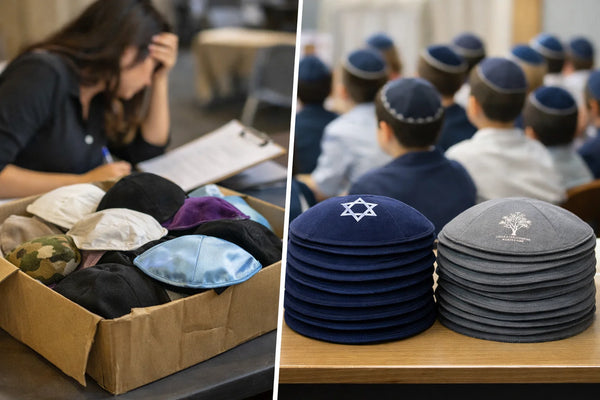
Key Takeaways
- Map the custom yarmulke count before design work starts. Guest list size, ceremony timing, and a real minimum order can change the whole plan fast.
- Choose materials for the room, not just the photo. Velvet, linen, leather, suede, and cotton each send a different signal, and bulk kippahs need to hold up through the ceremony, dance, and long wear.
- Keep the design clean. Logos, Hebrew text, dates, and family names can look sharp on a custom yarmulke, but crowded art often prints cheap and turns into a last-minute fix.
- Lock proofing early. One small color miss or sizing mistake can throw off an entire wedding or synagogue order, so sample checks and count checks need to happen before production moves ahead.
- Budget for the hidden stuff. Packaging, rush handling, and delivery to venues or hotels can add real cost to custom kippahs, especially when the order is large and the timeline is tight.
- Match the supplier to the event type. Schools, camps, synagogues, and planners need a partner that understands traditional Jewish events, not just a generic bulk print job.
A custom yarmulke order sounds simple until 250 guests are on the list and the printer is waiting on approval. Then the small stuff turns loud. One wrong fabric choice, one late proof, one off-size batch, and the whole stack starts to feel cheap fast.
Event planners know that Jewish ceremonies don’t forgive sloppiness. A wedding, bar mitzvah, school celebration, or synagogue event needs more than a logo and a date; it needs a piece that fits the traditions, sits well in bulk, and still looks good in photos after the dance floor gets busy. The honest answer is that the wrong yarmulke gets noticed. The right one disappears into the moment and does its job quietly.
That’s where timing, material, and finish matter more than most planners expect. A velvet run for a formal ceremony doesn’t behave like a linen order for a summer reception, and a rushed proof can turn Hebrew text into an expensive headache. Nobody wants that call two days before the event.
Why a custom yarmulke order can make or break a wedding or ceremony
One wrong order, and the whole table feels it. A custom yarmulke has to land on time, match the room, and fit the plan without turning into a scramble.
For a custom yarmulke with logo or a monogrammed yarmulke, the real risk isn’t style. It’s timing, proofing, and the minimum order math that hits hard when guest counts shift by 20 or 30 at the last minute.
Ceremony timing, guest counts, and the minimum order problem
A custom yarmulke for wedding should be locked 4 to 6 weeks out; for a custom bar mitzvah yarmulke or custom bat mitzvah yarmulke, 3 to 5 weeks is tighter but still workable. For a personalized yarmulke, planners should confirm the minimum, then add 10% extra for late RSVPs, grandparents, — the one cousin who suddenly wants a keepsake.
Matching traditions without making the design feel generic
Good design respects tradition without looking like every other table favor. A personalized wedding kippah, personalized kippah with name, or custom event yarmulke can carry Hebrew text, a subtle logo, or a pattern that echoes the caftan, kente stole, or beach hotel setting without turning the piece into a souvenir.
Where bulk orders go wrong: proofing, sizing, and last-minute changes
The honest answer is simple: custom yarmulke bulk order mistakes usually come from rushed proofs, vague sizing, — changes after print approval. A custom printed kippah, design your own kippah, or custom yarmulke for synagogue should be checked against the final guest list, the venue count, and the exact ceremony language before production starts.
Worth pausing on that for a second.
- Confirm quantity, size, and finish in one written proof.
- Ask for a backup set for damage or spill risk.
- Keep artwork simple if the order is going to bulk use.
That’s where iKIPPAHS tends to stay practical. Not flashy. Just correct.
Choosing materials, shapes, and finishes for custom kippahs
Material choices change how a custom yarmulke looks, feels, and survives a long ceremony. 1. Velvet reads formal and traditional. 2. Linen feels lighter for warmer venues. 3. Leather and suede look luxury without screaming for attention. 4. Cotton keeps costs down for a bulk order, and it’s the safer pick for kids who’ll wear it to dance, run, and spill juice on the wall display.
Velvet, linen, leather, suede, and cotton: what each one signals
A personalized yarmulke in velvet says ceremony; linen says relaxed dignity; leather says premium; suede says soft texture; cotton says practical. For a custom yarmulke for wedding tables, planners usually want something that feels handmade, not cheap, and still holds shape beside caftan fabrics, towels, and table cards. Turkish motifs, Greek patterns, or a kente-inspired color story can work too if the event calls for a unique’e visual cue.
Flat, dome, 6-panel, or rimmed: which shape suits the event
Flat styles sit close and stay discreet. Dome shapes show more volume. 6-panel builds structure for a traditional look. Rimmed versions help separate colors for school events, hotels, or venues where the headwear has to read from a distance. A custom bar mitzvah yarmulke often benefits from a firmer dome because it photographs well under ceremony light.
Luxury details that still hold up in bulk: logo, stitching, and trim
In a custom yarmulke bulk order, the smartest detail is one that prints cleanly and doesn’t slow production. A custom printed kippah with a small logo, tight stitching, and one strong trim color handles 100 units better than fussy extras. A custom yarmulke for synagogue use should still fit the minimum budget, while a personalized wedding kippah can carry monogrammed initials, but the finish has to survive customs checks, ground shipping, and a full room of guests. custom yarmulke for synagogue
How to design a custom yarmulke that feels personal, not cheap
Write this section as if explaining to a smart friend over coffee — casual but accurate and specific. A custom yarmulke should feel intentional, not like a last-minute hotel towel with a logo slapped on it. The best results usually come from simple layouts, one strong color story, and a clear minimum on text. That’s it.
Logos, Hebrew text, and event motifs that actually print well
design your own kippah works best when the art stays bold and the details stay clean. Thin script, tiny Hebrew letters, and crowded folk motifs can blur fast, especially on a custom printed kippah made for bulk use. A solid rule: if the logo can’t read at 1 inch wide, it won’t read on the head.
For a custom yarmulke with logo, keep the file high-res — avoid gradients that vanish in stitching or heat transfer. Wedding couples often want a custom yarmulke for wedding use with a date, a monogram, and one motif — maybe a caftan pattern, maybe a simple dance icon. Less clutter. More class.
Family names, dates, and wedding themes: what belongs on the kippah
A personalized yarmulke, a personalized kippah with name, or a monogrammed yarmulke should carry just one clear idea. For a custom bar mitzvah yarmulke or custom bat mitzvah yarmulke, the name and date usually beat a long quote; for a personalized wedding kippah, family initials and ceremony date tend to age better. A custom event yarmulke for synagogue use can add a Hebrew phrase, but don’t stack five customs into one piece.
For a custom yarmulke bulk order, iKIPPAHS says the sweet spot is one design, two sizes, and one proof round. Handmade-looking is fine. Cheap-looking isn’t. The difference shows at the venue, not on the screen.
Bulk ordering logistics for event planners, schools, synagogues, and camps
A synagogue orders 180 pieces for a ceremony, and the proof lands at 4 p.m. on Thursday. By Monday, the custom yarmulke stack has to be boxed for a wedding, a bat mitzvah, and a camp sendoff. Tight? Yes. Fixable? Also yes.
Lead times, proof approvals, and when to place the order
For a custom bar mitzvah yarmulke, a custom event yarmulke, or a custom bat mitzvah yarmulke, planners should build in 3–6 weeks, not 3–6 days. That window covers proof approval, minimum counts, and the ugly little delays that show up in customs-style rush fees, wage changes, or material swaps. For a personalized yarmulke or personalized kippah with name, one proof round is normal; two rounds start eating time. A custom yarmulke for wedding tables also needs the same early order discipline, even if the ceremony feels far off.
Guest-flow planning for venues, hotels, and dance-floor giveaways
Guest flow matters more than people think. If the kippahs sit at hotel check-in, the front wall, or the dance floor, the count should match arrival patterns — not just the RSVP list. A custom printed kippah with logo works well for entry tables, while a personalized wedding kippah near the ground of the venue’s main room disappears fast once dancing starts. Need one batch for a beach chuppah and another for a banquet hall? Split the order by location, not by hope.
Budget control: bulk pricing, customs-style fees, and where hidden costs show up
A custom yarmulke bulk order looks cheap until the extras show up: rush labor, specialty thread, monogrammed yarmulke setup, shipping boxes, and reprint fees. The cleanest approach is a single approved layout — logo, Hebrew text, or name — then one production run. For schools, a custom yarmulke for synagogue use should stay traditional and simple; for a camp, a custom printed kippah can carry folk color, but the budget still lives or dies on quantity.
One blunt rule: if the order isn’t final, the price isn’t final. Ask that before the call.
That’s especially true for a custom yarmulke with logo, where fabric choice, temperature during storage, and even overseas customs can nudge timing. A custom event yarmulke done right isn’t hard. It just needs one decision-maker, one proof, and one deadline.
Sounds minor. It isn’t.
Quality checks before a custom yarmulke gets approved
What’s the first thing an event planner should ask before placing the final order? Simple: does the proof actually match the ceremony, the venue, and the people wearing it. A custom yarmulke can look perfect on screen and still miss the mark in hand, especially for a wedding or a bar mitzvah with a hard deadline and a minimum count.
Sample requests, color matching, and production consistency
For any personalized kippah with name, ask for a sample or a print proof before approving a bulk run. If the plan includes a personalized wedding kippah, compare the fabric under the actual reception lighting, not just under office lamps. Navy can shift. Gold can go flat. A strong supplier will show the logo, font, and placement on one proof — then repeat it across the full run without drift. That’s the difference between a clean table display and a pile of mismatched favors.
Packaging, counts, and delivery checks for large ceremony orders
A custom yarmulke bulk order should be counted twice: once at pack-out and once at receipt. For synagogue programs, camps, and youth weekends, planners should label boxes by size, color, and table number. If the order includes a custom printed kippah, make sure the ink won’t scuff during transport, and ask for overage on a 100-piece run — 5 extra pieces is a smart buffer.
Working with a supplier that understands Jewish events and tight timelines
The best vendors know a custom bar mitzvah yarmulke needs faster turnaround than a beach weekend favor, and a custom yarmulke for synagogue has different rules than a luxury gift box. A custom event yarmulke, a monogrammed yarmulke, or a custom yarmulke with logo should be checked for tradition, fit, and name spelling. The same goes for a custom bat mitzvah yarmulke or a design your own kippah project. iKIPPAHS handles those details with the kind of consistency planners need.
Experience makes this obvious. Theory doesn’t.
Frequently Asked Questions
What is the minimum order for a custom yarmulke?
The minimum order for a custom yarmulke usually starts at a small bulk run, not a single piece. That’s the point: once a synagogue, school, or family is ordering for a ceremony, wedding, or camp program, the per-unit price makes a lot more sense. The exact minimum depends on material, print method, and whether the order includes a logo, name, or full design.
How far in advance should a bulk custom yarmulke order be placed?
Plan on 3 to 6 weeks for most bulk custom orders. Simple jobs move faster; embroidered pieces, special fabrics, or large wedding counts can take longer, especially if the proof changes twice. If the order is tied to a fixed date, don’t cut it close.
Can a custom yarmulke include a logo or Hebrew text?
Yes. A custom yarmulke can carry a logo, Hebrew text, a date, or a short phrase that fits the event without crowding the crown. Clean layouts work best; too much copy makes the piece look busy and cheap.
What materials work best for custom yarmulkes?
Velvet, cotton, linen, leather, suede, and satin all work well, but they don’t behave the same way. Velvet feels formal and traditional, cotton is practical for daily wear, and linen or burlap gives a lighter look for spring events, beach weddings, or outdoor venues. If the order is for children or a long ceremony, comfort matters more than flash.
Are custom yarmulkes good for weddings and bar mitzvahs?
Absolutely, and that’s where they do their best work. Weddings often call for a matching color story, while bar mitzvahs usually need a design that feels traditional but still special enough to keep after the ceremony. A good custom yarmulke becomes part of the memory, not just a favor on a chair.
Most guides gloss over this. Don’t.
How do custom yarmulkes compare with handmade or homemade options?
Handmade and homemade pieces can be charming, but they’re hard to standardize across a bulk order. A custom yarmulke from a production shop gives you the same size, shape, stitching, and print placement on every unit, which matters when 100 guests are getting one. Consistency beats improvisation here.
Can custom yarmulkes be made in luxury styles?
Yes. Luxury doesn’t have to mean flashy; it can mean rich fabric, careful stitching, a better rim, and a design that looks right with suits, caftans, or other formal wear. For high-end weddings or donor events, a polished custom yarmulke reads a lot better than a novelty piece.
What should schools and camps ask for in a bulk order?
Schools and camps should ask for durable fabric, repeatable sizing, and a design that still looks good after wear and storage. Ask about weight, stitch finish, and whether the piece will hold up through dance events, camp Shabbat, or daily use. If kids are involved, comfort and grip matter more than almost anything else.
Do customs, shipping, and overseas orders affect timing?
They can, especially for international bulk orders. Customs checks, airline delays, and temperature changes during transit can all affect fabric condition and delivery timing, so those orders need a wider buffer. If the shipment is headed to hotels, venues, or a resort-style event, build in extra days and don’t pretend the deadline is flexible.
Is there a difference between a traditional custom yarmulke and a fashion-forward one?
Yes, and the gap is bigger than people think. Traditional styles lean on black velvet, simple shapes, and conservative finishing, while fashion-forward options may use bold color, pattern, logo placement, or a less expected material like denim or leather. The right choice depends on the group, not the trend.
What size and shape should be chosen for a custom yarmulke?
That depends on the age group — how the yarmulke will be worn. Flat styles feel classic, dome styles sit differently on the head, and 6-panel versions give a more structured look. If the order is for a mixed group, ask for sizing guidance before approving the proof.
Are inexpensive custom yarmulkes a bad idea?
Cheap isn’t always smart.
A lower price can work for a one-night event, but if the fabric looks thin or the print fades, guests notice fast. For bulk orders, it’s better to spend a little more and get something that feels made on purpose, not thrown together.
Simple idea. Harder to get right than it sounds.
A custom yarmulke order looks simple until the guest list shifts, the proof arrives late, or the fabric choice reads too casual for the room. That’s why the strongest event plans start with three things: a realistic headcount, a material that fits the setting, and a design that still looks good when it’s produced in bulk. Small choices carry weight here. A clean logo, a readable Hebrew line, and a shape that suits the tone of the event will do more for the finished piece than a crowded design ever will.
Planners who think ahead save themselves the scramble.
They ask for samples, confirm counts, and build in time for one round of changes before production starts. That discipline keeps the order from turning into a last-minute fix.
The next step is simple: review the guest count, settle the design direction, and request a sample before approving the full custom yarmulke run.
